Structured, level-based instruction that helps children build real swimming ability step by step, from water confidence to strong, efficient strokes. Designed for families seeking consistent progress, clear milestones, and skilled coaching in a supportive environment. Enrol today to help your child move forward with confidence in the water.
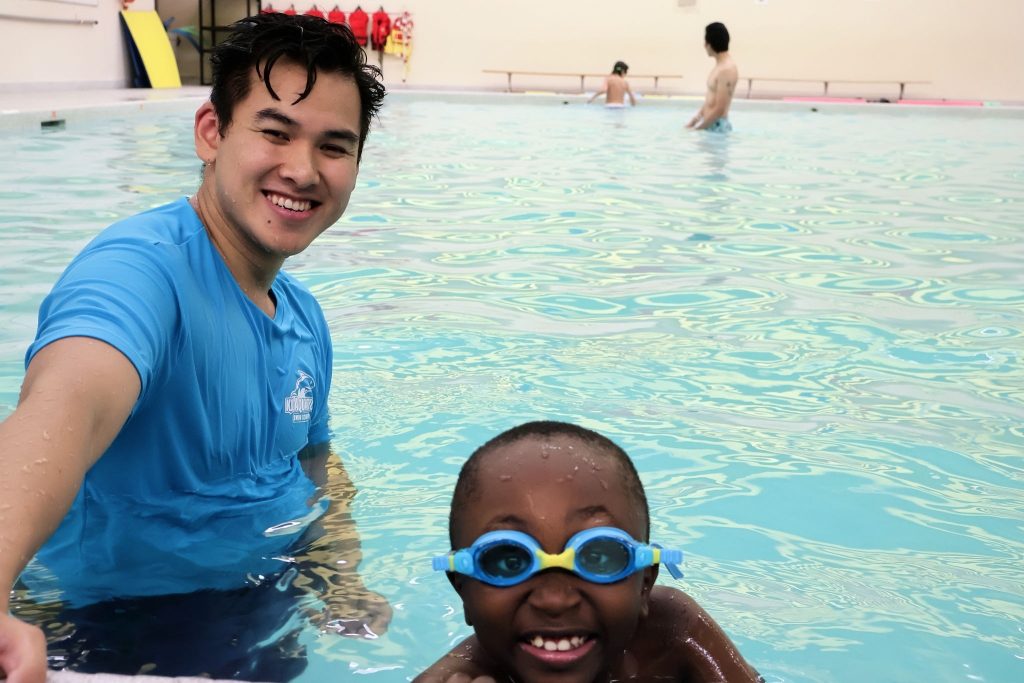
Each session follows a planned structure that balances skill development, repetition, and guided practice. Instructors use demonstration, assisted drills, and supervised swimming to reinforce technique.
Progress is monitored through regular assessment, allowing children to advance when they meet defined skill benchmarks. Equipment such as kickboards and floats may be used to support learning at different stages.
This programme focuses on guiding children through clearly defined stages of swimming development. Each stage builds on the last, helping swimmers gain confidence, coordination, and control in the water.
Lessons are designed around age, ability, and comfort level, ensuring steady improvement without rushing key skills.
Early stages focus on floating, breath control, and basic movement through the water. Children learn how to enter, exit, and orient themselves safely while developing trust in the aquatic environment.
As confidence grows, instruction shifts toward structured stroke development. Children practise arm and leg coordination, body position, and rhythmic breathing for strokes like freestyle and backstroke.
Intermediate levels introduce longer distances and smoother transitions between strokes. Swimmers build stamina while refining technique, helping movements become more controlled and energy-efficient.
Higher levels focus on precision, timing, and consistency across multiple strokes. Children learn turns, streamlined movement, and stronger propulsion, preparing them for independent swimming.
Well-structured lessons ensure each child develops skills in the correct sequence. This approach supports long-term improvement, helping swimmers move confidently from basic ability to strong technique.
Qualified instructors provide clear feedback, maintain consistent standards, and adapt teaching methods to suit each learner’s pace.

Children can begin as soon as they are comfortable in the water, often from early primary years. Programmes are adapted to suit both younger beginners and older learners starting later.
Progress depends on attendance, confidence, and practice. Many children show noticeable improvement within a few weeks, with steady advancement across structured levels over time.
No prior experience is required for entry-level stages. Lessons are grouped by ability, ensuring each child starts at the appropriate level and builds skills progressively.
When selecting lessons, consider class size, instructor experience, and how progress is tracked. Look for clear level structures and consistent teaching methods.
A well-run programme provides regular feedback, visible improvement, and a positive learning environment that keeps children engaged and motivated.
