Build confidence, technique, and water awareness through focused one-on-one instruction designed for beginners and early learners. These lessons help swimmers develop strong foundations at their own pace with clear guidance and consistent progress. Start with a structured approach that makes learning comfortable and effective.
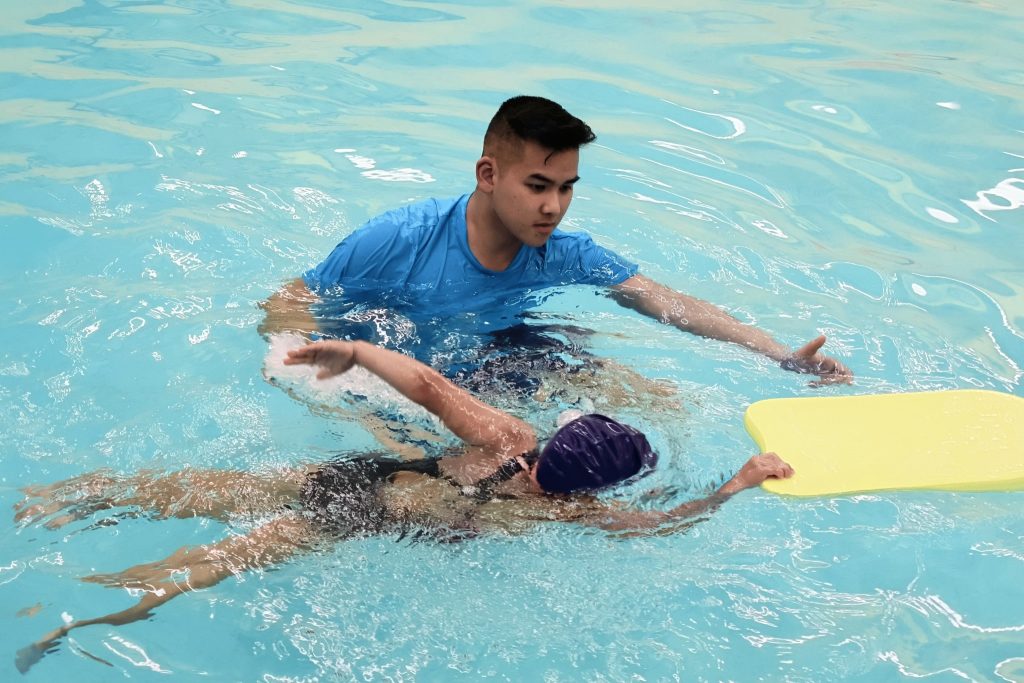
Sessions begin with a brief assessment to understand comfort level and mobility in the water. Instructors use structured drills, flotation aids when appropriate, and clear demonstrations. Progress is tracked across sessions, with adjustments made based on performance and comfort. Emphasis remains on controlled movement, proper breathing rhythm, and safe water habits throughout.
One-on-one swim instruction focuses on building essential skills such as breathing control, floating, kicking, and basic stroke mechanics. Lessons are adapted to the swimmer’s pace, comfort level, and physical ability. This approach ensures steady progress through consistent guidance and immediate feedback.
Early sessions focus on water familiarisation, body positioning, and breath control. Swimmers learn to float, submerge, and move comfortably in the water. This stage builds the base for all future swimming ability.
Programs are tailored for both children and adults learning from scratch. Instruction methods differ based on age, coordination, and learning style. Each session follows a clear progression without rushing key fundamentals.
Basic freestyle and backstroke movements are introduced once control and balance improve. Emphasis is placed on efficient kicking and simple arm coordination. This avoids developing habits that are difficult to correct later.
Lessons can take place in residential pools or designated training facilities. The environment is assessed for safety, depth, and suitability. This flexibility allows sessions to fit into existing routines.
Individual attention allows instructors to adjust techniques in real time and reinforce correct movement patterns. This leads to smoother progression and stronger foundational skills. Swimmers gain confidence as each step is mastered with clarity.

Lessons typically cover floating, breathing control, kicking, basic arm movements, and water safety awareness. Each session builds on previously learned skills with guided repetition. Instruction is paced to match individual comfort and ability.
Progress depends on consistency, confidence, and physical coordination. Many learners develop basic comfort and movement within several sessions. Continued lessons help refine technique and improve endurance.
Most sessions require standard swimwear and sometimes goggles. Instructors may provide training aids such as kickboards or flotation devices. Equipment is introduced only when it supports skill development.
Lesson frequency, session length, and learning goals are discussed before starting. Scheduling is flexible to suit availability and pool access. Clear communication ensures expectations are aligned, and progress remains steady with each session.
