Build calm, confident floating in a supportive group setting with structured coaching and clear progression. These sessions focus on balance, breath control, and body position so you can stay relaxed on the water. Small groups, consistent routines, and qualified instruction help you develop reliable floating skills faster. Join a class and feel the difference in your first few sessions.
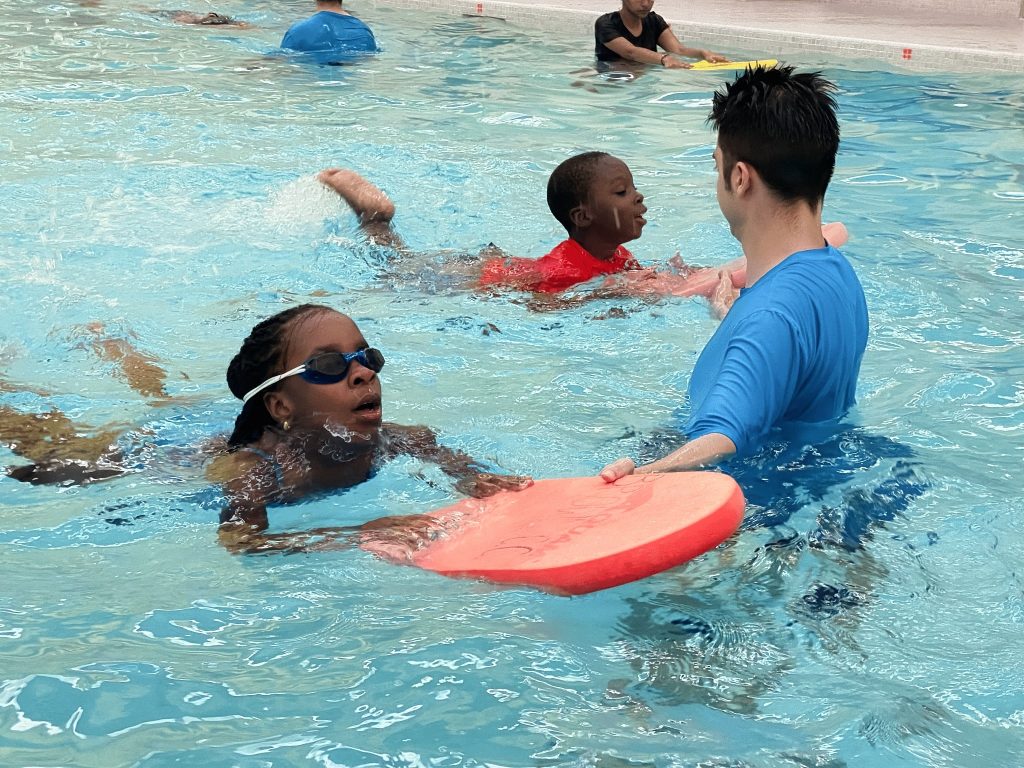
Each session follows a structured plan: warm-up, skill block, drill sets, and cool-down. Equipment such as kickboards and noodles is used briefly to teach balance, then removed to build independent control. Coaches position themselves for close observation, adjusting hand support and cues as needed. Water depth, lane spacing, and class size are managed to keep movement safe and focused.
These classes develop stable floating on the front and back using repeatable drills and coach-led feedback. Sessions run in shallow and mid-depth water with a focus on alignment, buoyancy, and controlled breathing. Participants learn to transition between positions and maintain stillness without tension, building a dependable foundation for all strokes.
Early sessions use shallow lanes to establish comfort and correct head, hip, and spine alignment. Instructors guide hand placement and gentle sculling so learners feel lift and balance. Clear cues and brief repeats help participants recognise a neutral, supported float.
Back floating is introduced with progressive support, then reduced assistance as control improves. Timed breath patterns and quiet exhalation keep the body level and steady. Participants practise entries, holds, and smooth recoveries to standing.
Front floats focus on face-in-water comfort and a long, aligned body line. Drills include push-offs, glide holds, and light kick isolation while maintaining buoyancy. Coaches correct head position and core engagement for a clean, stable shape.
Classes are structured so beginners and improvers can progress together without disruption. Stations and set intervals allow individual feedback within a group format. This approach maintains pace while keeping instruction precise and relevant.
Qualified instructors use clear cues, short drill cycles, and immediate feedback to refine technique. Regular checkpoints track hold time, stability, and transitions, so improvement is visible and repeatable. Participants leave with reliable floating skills that transfer directly to independent practice.

Classes suit non-swimmers and improvers. You should be comfortable standing in the water and following simple instructions. Coaches adapt drills to your starting point and progress at a steady pace.
Many participants achieve short, stable floats within a few sessions. Consistency matters, so regular attendance helps you extend hold time and control. Instructors set clear targets each week.
Wear comfortable swimwear and bring a towel. Goggles are recommended for front float work. All training aids are provided and used as needed during drills.
Expect small groups, clear instruction, and practical feedback each class. Sessions typically run in set blocks, allowing skills to build week by week. If you have specific goals, discuss them with the coach at the start so drills can be tailored. Booking in advance secures your place and keeps your progression consistent.
