Build comfort, control, and calm in the water through structured small-group sessions that prioritise steady progress and clear technique. These lessons help hesitant swimmers gain trust in the pool while learning essential skills at a manageable pace. Join a supportive group and start moving with confidence.
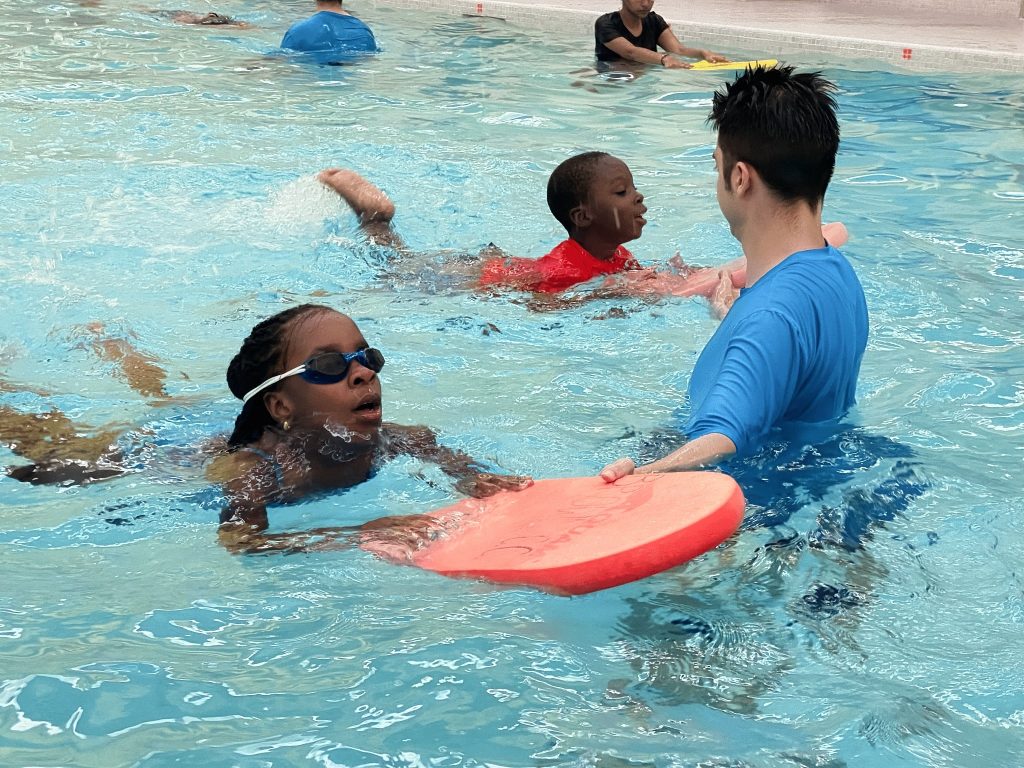
Each lesson follows a planned sequence: warm-up, skill focus, guided drills, and short swims. Instructors use kickboards, noodles, and lane markers to structure space and support technique. Feedback is immediate and specific, with demonstrations and hands-on guidance where appropriate. Water depth, group size, and task difficulty are adjusted to keep progress steady and controlled.
These sessions are designed for learners who want to feel at ease in the water while developing reliable swimming basics. Classes run in small groups with consistent routines, clear demonstrations, and repeatable drills. The focus is on breath control, body position, and coordinated movement in a shared learning environment.
Early sessions take place in controlled depths where participants can stand and reset easily. Instructors guide entry, floating, and submersion with simple cues and steady pacing. This creates familiarity with water sensations and builds a calm, repeatable starting point.
Core skills include front and back float, kicking patterns, and assisted glides. Learners practise alongside others at a similar level, which supports rhythm and consistency. Drills are short and focused, allowing quick feedback and visible progress.
As confidence grows, sessions introduce unassisted movement across short distances. Emphasis stays on alignment, breathing timing, and relaxed propulsion. Distances increase gradually to reinforce control rather than speed.
Group formats encourage regular attendance and peer support. Watching others complete tasks helps clarify technique and pacing. Instructors maintain structure so each participant receives attention within the session flow.
Qualified instruction brings clear progression, consistent terminology, and safe pacing. Learners develop dependable habits that transfer across different pools and conditions. Over time, this results in smoother movement, better breath control, and a confident, composed presence in the water.

They suit beginners and returning learners who want to build comfort first. Groups are organised by ability, and instructors adjust tasks to match each participant’s starting point.
Most learners notice improved ease within a few sessions. Consistent attendance and practice between lessons help reinforce breathing, floating, and basic movement patterns.
Bring swimwear, a towel, and goggles if preferred. Equipment used for drills is provided, and instructors explain how each item supports technique during the lesson.
Classes run at set times with small groups to maintain attention and flow. Expect clear instruction, short practice sets, and regular feedback. Progress is steady rather than rushed, with skills revisited to ensure control. Booking in blocks supports continuity and measurable improvement.
