Build calm, confident floaters with structured water sessions that teach body position, breath control, and effortless buoyancy. Designed for children at early stages, these lessons turn uncertainty into relaxed floating across front and back. Book a class to help your child feel light, balanced, and in control in the water.
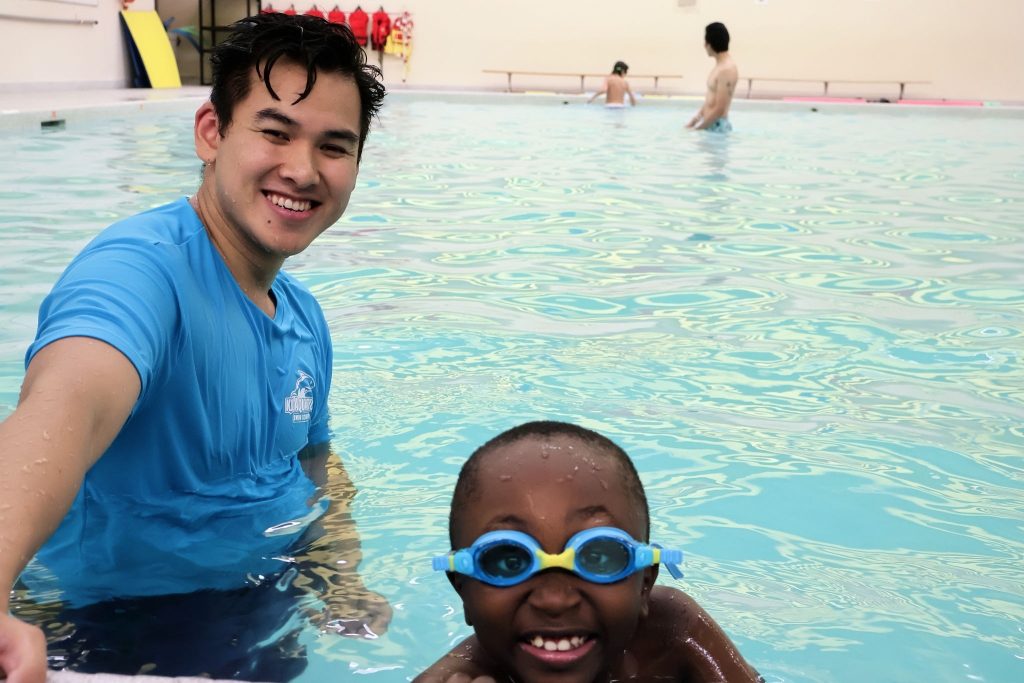
Classes follow a clear progression: orientation, supported floats, independent holds, and controlled transitions. Instructors use kickboards, noodles, and hand support as temporary aids, removing them as balance improves. Warm-up and cool-down routines reinforce cues like head alignment and gentle exhale. Water depth, spacing, and supervision are managed carefully to keep practice focused and consistent.
These sessions focus on the mechanics of buoyancy and balance rather than speed or distance. Children learn to align the head, hips, and heels, regulate breathing, and maintain stillness. Instructors use clear cues and hands-on guidance to help each child discover how their body naturally floats.
Children practise prone floating with gentle face immersion and steady exhale. Coaches guide arm placement and hip lift to create a flat, supported body line. Short repetitions build comfort and a smooth breathing rhythm.
Back floating emphasises ear-to-water position, soft knees, and open chest. Instructors use light support at the shoulders and hips, then reduce assistance as stability improves. The goal is a calm, starfish-like float.
Students learn simple rolls from front to back and back to front using shoulder rotation and core control. These movements connect floating positions and encourage independence in the water.
Practice occurs across depths, starting where children can stand and progressing to deeper sections. Consistent cues and spotting build trust in floating regardless of pool depth.
With a qualified instructor, children develop efficient body position and steady breathing that support all future swim skills. Sessions are paced to each learner, using consistent terminology and progressive drills. The result is reliable floating, improved relaxation, and smoother transitions into kicking and basic strokes.

Most children can begin once they are comfortable entering the water and following simple instructions. Many start from early primary years, with activities adapted to attention span and size.
Progress varies, but consistent weekly sessions typically show steady improvement within a few weeks. Independent back floats often come first, followed by confident front floats and easy transitions.
Yes, aids like noodles and boards are used briefly to demonstrate position and support. They are reduced quickly so children learn to rely on body balance rather than equipment.
Expect short, focused drills with plenty of rest and feedback. Comfortable swimwear and goggles are recommended. Arrive early for a quick briefing, and plan regular attendance to build muscle memory. Parents can observe and receive simple cues to reinforce between sessions.
