Build efficient technique, stronger coordination, and confident movement in the water with focused coaching that refines how your child swims, not just how far. Sessions target body position, breathing timing, and stroke mechanics so progress is clear and repeatable. If you want measurable improvement in freestyle, backstroke, breaststroke, or butterfly, book a session and see the difference in the first few lessons.
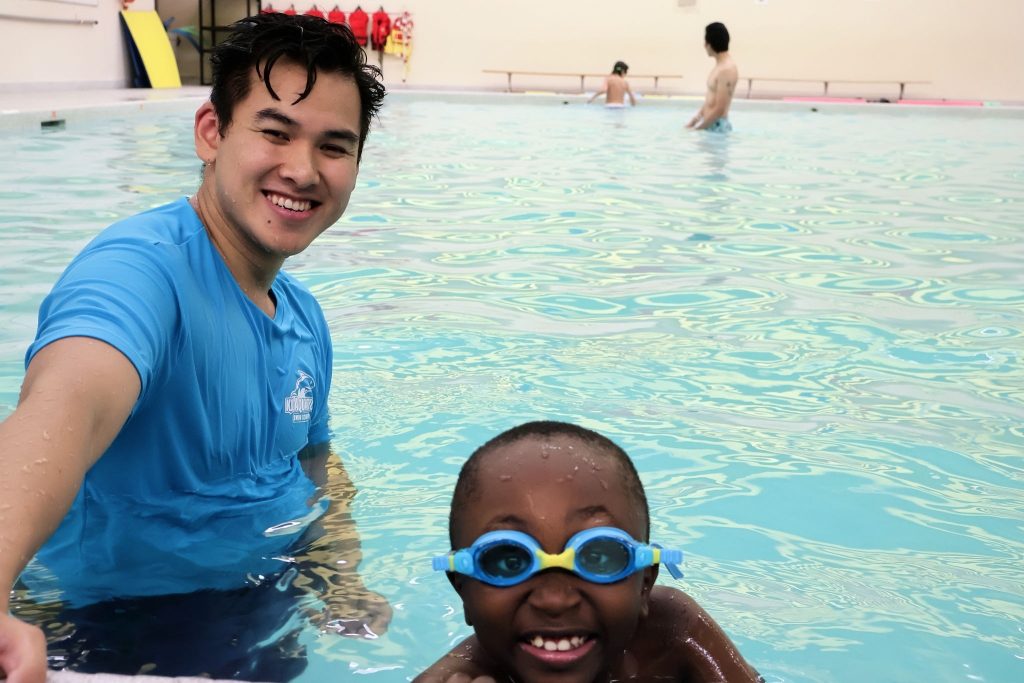
Sessions begin with a brief assessment to set priorities for each stroke. Coaches plan drills that isolate key movements, then integrate them into full-stroke swimming.
Tools such as kickboards, pull buoys, fins, and pace clocks are used to reinforce technique and timing. Feedback is specific and actionable, with video or poolside cues where helpful.
Progress is tracked across sessions, adjusting sets, distances, and rest to match development while keeping technique the focus.
These lessons concentrate on how each stroke is performed, breaking skills into clear, teachable parts. Children learn alignment, propulsion, and rhythm through structured drills and coached repetition.
Training adapts to age and current ability, ensuring steady progress without overwhelming the swimmer.
Coaches refine body line, catch phase, and kick timing to reduce drag and improve distance per stroke. Side breathing is taught with consistent head position and relaxed timing.
Short sets and feedback help children feel the difference between rushed and efficient movement.
Swimmers develop a stable head position and learn controlled shoulder rotation for smoother propulsion. Drills emphasise straight arm recovery and a continuous flutter kick.
Lane markers and visual cues guide direction and spacing in shared pool environments.
Instruction focuses on the sequence of pull, breath, kick, and glide. Children practise narrow kicks and streamlined glides to maintain momentum.
Coaches use tempo cues so swimmers understand when to accelerate and when to hold position.
Foundations include dolphin kick from the core and coordinated arm recovery. Sets build a consistent two-beat kick pattern with a relaxed breath.
Progressions keep effort manageable while establishing a repeatable rhythm.
Professional instruction turns effort into efficient movement, so children swim further with less fatigue. Clear cues and immediate correction build reliable habits that carry across strokes.
Over time, swimmers show smoother timing, stronger propulsion, and confidence in different pool settings, from lessons to club sessions.

Children should be comfortable in the water and able to swim a short distance independently. From there, lessons are tailored to refine technique at beginner, intermediate, or advanced levels.
Coaches adjust drills so each swimmer works at an appropriate challenge point.
Typical sessions run 30 to 60 minutes. Two sessions per week supports faster improvement, while one session maintains steady progress.
Consistency matters more than intensity, especially for building timing and muscle memory.
All four competitive strokes can be included, with emphasis placed where improvement is most needed. Many swimmers start with freestyle and backstroke before adding breaststroke and butterfly.
Programmes remain flexible as skills develop.
Expect clear goals, structured sets, and visible technique changes over a series of lessons. Progress is measured through smoother movement, better breathing control, and improved stroke timing.
Parents receive practical feedback on what to practise between sessions, helping reinforce skills and maintain momentum.
